Testimony to Genovese
baroque architecture, the aristocratic
Palais Lascaris in Nice, France was built in the mid-17th century for the Counts Lascaris-Vintimille, under whose tutelage it belonged until 1802. The City of Nice purchased it in 1942 in very poor condition and in 1946 designated the building an Historical Monument. It has since been transformed into a museum well worth visiting should you find yourself on the French Riviera.
 |
| Bed chamber ceiling fresco - The Abduction of Psyche. |
Nestled in the heart of Nice’s Old Town on Rue Droite, the Palais Lascaris is home to the municipal museum of “popular art and traditions”. Although its architects are unknown, its style is Genovese baroque. Major renovations did not begin until 1963 but were completed in 1970 when it was officially opened to the public.
 |
| Foyer staircase of the Palais Lascaris. |
 |
| Ceiling fresco of Venus and Adonis |
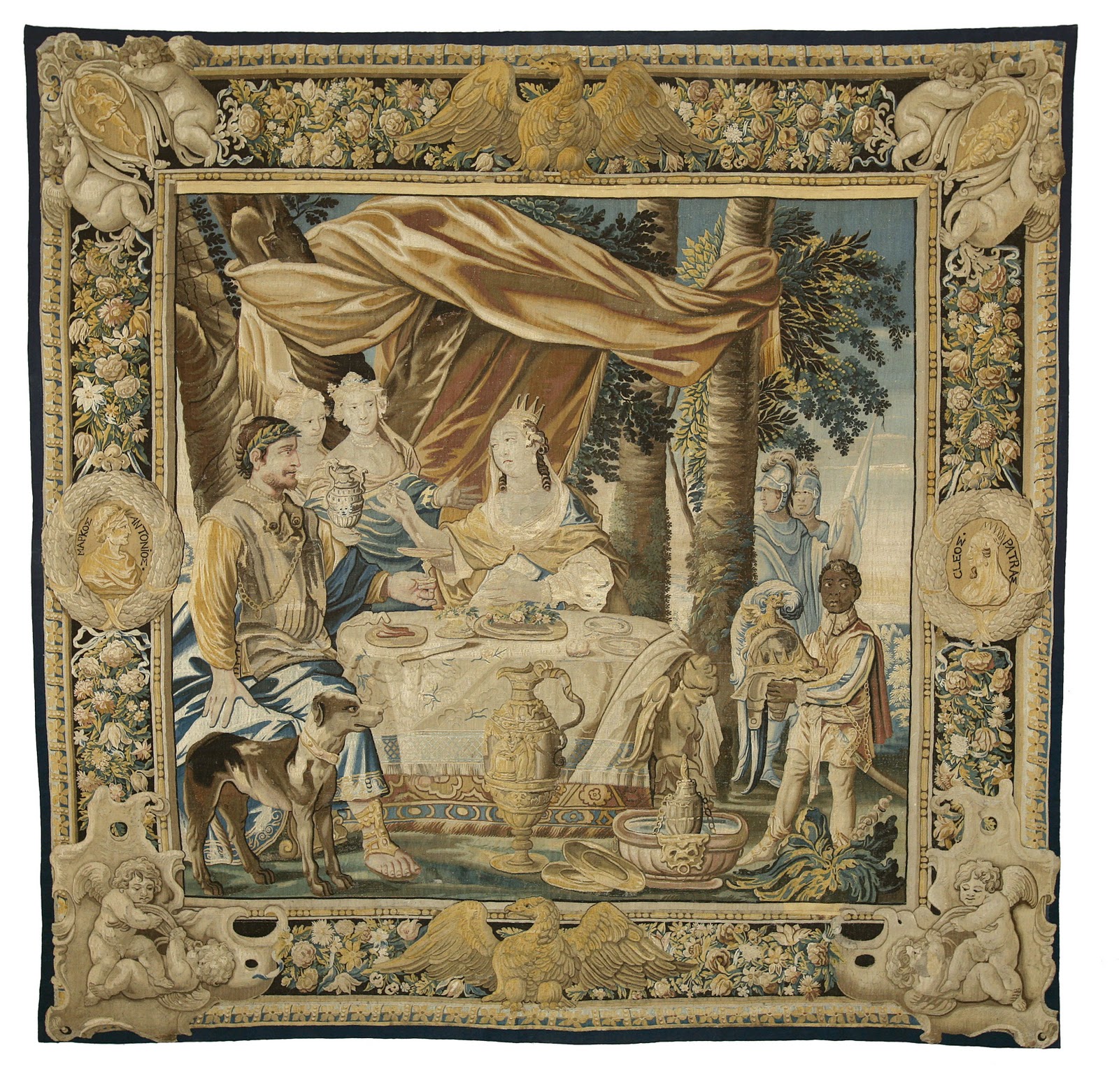
Its opulent façade, large windows and balconies with marble balusters draw you into a foyer where a monumental staircase winds upward, surrounded by frescoes and luxuriously decorated salons on each floor. Flemish tapestries, statues, furniture dating from the 17th and 18th centuries as well as faiences from the same era embellish the residence. The third, “noble” floor, so-called due to the apartments situated there, boasts its original ceiling frescoes dating from the 17th century. The statues and the rococo décor of the salons were added in the 18th century.
 |
| Bed chamber on the "noble" floor of the Palais. |
 |
| 17th century painted doors and tile floors. |
 |
| 18th century furniture. |
 |
| "Le Banquet" Flemish tapestry. |
 |
| Chapel ceiling fresco - Wisdom defies Time and Death. |
The Palais is also home to a beautiful collection of antique musical instruments, some of which are on permanent display. In 2009, the Groupe Axa presented the Palais Lascaris with an exceptional gift – the Gaveau-Erard-Pleyel foundation. The elements of this foundation, put together by three of the biggest names in European musical instrument manufacturing, consist of instruments, books, letters, engravings, tools, illustration, photos and more, all of which tell an elaborate story of the history of the piano and the harp from the 18th century until the mid 20th century in France and all of Europe.
 |
| Naderman harp, c. 1780. |
The exhibit will be on display in the Palais Lascaris from October 20, 2010 to April 2011.