Showing posts with label Nice. Show all posts

Tuesday, October 19, 2010

The Palais Lascaris


Testimony to Genovese baroque architecture, the aristocratic Palais Lascaris in Nice, France was built in the mid-17th century for the Counts Lascaris-Vintimille, under whose tutelage it belonged until 1802.  The City of Nice purchased it in 1942 in very poor condition and in 1946 designated the building an Historical Monument. It has since been transformed into a museum well worth visiting should you find yourself on the French Riviera.


Bed chamber ceiling fresco - The Abduction of Psyche.
Nestled in the heart of Nice’s Old Town on Rue Droite, the Palais Lascaris is home to the municipal museum of “popular art and traditions”. Although its architects are unknown, its style is Genovese baroque. Major renovations did not begin until 1963 but were completed in 1970 when it was officially opened to the public.

Foyer staircase of the Palais Lascaris.
Ceiling fresco of Venus and Adonis
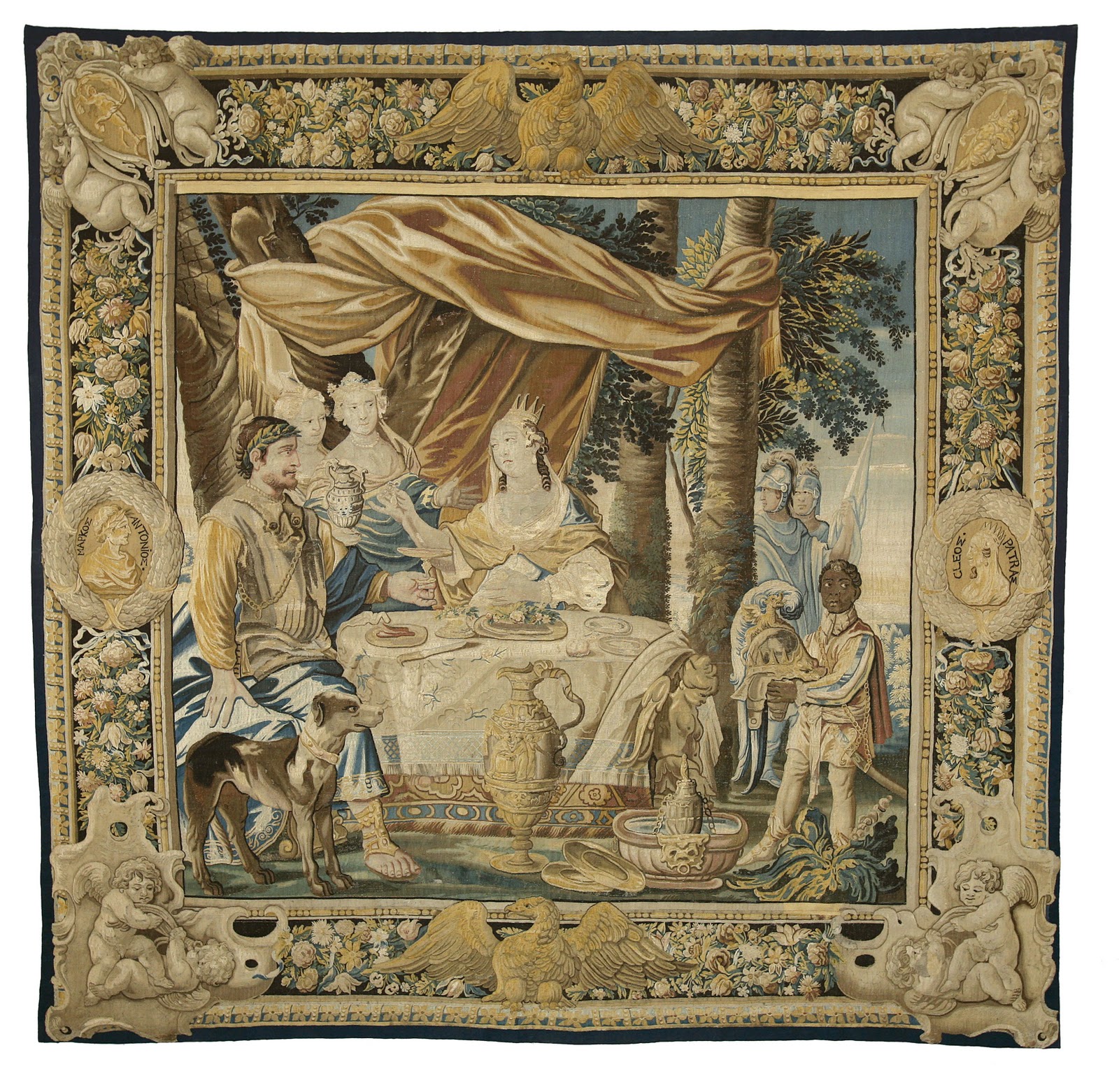
Its opulent façade, large windows and balconies with marble balusters draw you into a foyer where a monumental staircase winds upward, surrounded by frescoes and luxuriously decorated salons on each floor. Flemish tapestries, statues, furniture dating from the 17th and 18th centuries as well as faiences from the same era embellish the residence. The third, “noble” floor, so-called due to the apartments situated there, boasts its original ceiling frescoes dating from the 17th century. The statues and the rococo décor of the salons were added in the 18th century.

Bed chamber on the "noble" floor of the Palais.

17th century painted doors and tile floors.

18th century furniture.
"Le Banquet" Flemish tapestry.

Chapel ceiling fresco - Wisdom defies Time and Death.

The Palais is also home to a beautiful collection of antique musical instruments, some of which are on permanent display.  In 2009, the Groupe Axa presented the Palais Lascaris with an exceptional gift – the Gaveau-Erard-Pleyel foundation. The elements of this foundation, put together by three of the biggest names in European musical instrument manufacturing, consist of instruments, books, letters, engravings, tools, illustration, photos and more, all of which tell an elaborate story of the history of the piano and the harp from the 18th century until the mid 20th century in France and all of Europe.


Naderman harp, c. 1780.

The exhibit will be on display in the Palais Lascaris from October 20, 2010 to April 2011.

Thursday, August 19, 2010

Places We Love...


CHEZ RENE SOCCA

It’s easy to get sucked into a tourist trap in an international vacation destination like Nice, France and during the summer months it is especially hard to find a decent restaurant – that time of year the prices are higher, the food lousier and the service, well, sometimes non-existent.

However, even in the peak of the summer season, there is one special place in the middle of the Old Town (“Le Vieux Nice”) that is consistent, delicious and cheap to boot! It’s a place we return to time and time again, all year round, never tiring of their typically niçois fare: Chez René Socca.


René Socca, as its name indicates, specializes in Socca - a delicious, giant chick-pea crepe of sorts that is baked to perfection in wood burning stoves, served piping hot with salt and pepper, wrapped in paper and eaten with your fingers (watch out - it's hot!) and washed down preferably with ice cold rosé wine (if you’re old enough, of course). Satisfying and nutritious, it is a great little snack that you find only in Nice.

Pan full of Socca, fresh out of the oven.
Socca.

Of course, René Socca serves other spécialités niçoises such as “beignets de fleurs de courgettes” (fried zucchini flowers), “farcis” (stuffed vegetables), “pissaladiere” (caramelized onion pizza), and “tourte de blettes” (Swiss chard tart, served sweet or savory), just to name a few.

Beignets de fleurs de courgettes.
Acras.

Counter service at Rene Socca.

What’s great about this place is it’s open all day long, you stand in line at the counter, order your food and sit down at the little wooden tables outside and eat. Drinks are served at your table from the bar across the street. What could be simpler? It’s been there for as long as I can remember (that’s a long time) and it’s cheap! A serving of socca is about 2 euros and an ample snack for two on its own, but you won’t be able to resist all the other goods – much too tempting! Bon Appétit!


Jean-Marc queuing up for socca!

Order's up!
Juliette patiently waiting for the first bite...


 CHEZ RENE SOCCA
2 rue Miralhéti
06300 NICE
(33) 04.93.92.05.73

Friday, July 2, 2010

Homage To a Niçois...


Niçois Designer's Work Makes a Statement at Michael Jackson Auction

One year after Michael Jackson's sudden death, Julien's Auctions in Las Vegas held an impressive auction for the late King of Pop, presenting the furniture that Jackson had commissioned for his Kent residence in England. Michael Jackson was planning to use that home as his residence for his “This is It” concert series. Along with furniture there were 200 pieces of memorabilia such as his Swarovski crystal studded glove from his Victory Tour, a signed "Beat It" jacket, and signed "Bad" Lyrics.


One of the pieces that sparked our interest was a stool designed by our Niçois neighbor, Jean-Antoine Hierro. Jean-Antoine is an artist and furniture designer who designs under the name "Hierro Desvilles". His gallery is just a short walk down the street from us in the antique district of Nice.


Forever the showman onstage and off, Jackson always aimed at making a statement and his interior design and furniture were no different. This spectacular red velvet upholstered stool is accented with gold welting and decorative bronze gilt carved wooden feet. Called "La Dimora di un Gentleman" this piece was designed by Hierro and handmade in Italy to exact specifications by the Italian furniture design house Colombostile. "La Dimora di un Gentleman" translates as "The House of a Gentleman". Michael Jackson originally commissioned the piece at a retail price of $17,000. Estimated at auction at $10-15,000, it outperformed the odds selling for $21,250.

Bravo, Jean-Antoine Hierro!

Wednesday, April 28, 2010

A Postcard From Nice...

I took a plane a few days ago from Nice (France) to Austin (Texas). Since I was delayed a bit, I had a few days to stroll around my city...

Fresh coat of paint on a classic fishing boat in the Port of Nice.
"Les Pointus" (pointy boats) - I would love to own one sometime in the near future...
Nice is surrounded by mountains which help maintain a splendid climate all year long.
Russians, English, poets, and artists have made this heaven their home for centuries.
Many vestiges of this glorious past overlook the bay.
The chateau from Cocteau's "La Belle et la Bete".


The Port of Nice.

Sur la mer...

Pin Parasol (umbrella pine).

The old "Plongeoir" (diving board).
Seaside route.

Ship in the Port of Nice.

Soaking up some rays...

Chateau.
Building in the Vieux Nice (Old Town).

Facade nicoise.
A la prochaine...

Do you have any favorite promenades you've made on the French Riviera?

Tuesday, August 11, 2009

La Vie En Rose...Villa Ephrussi de Rothschild

By Cynthia Fray


I’ll never forget my first visit to St. Jean Cap Ferrat. I remember it had an almost ethereal feel to it, most likely due to the dizzying effect of the cliffs that precipitously meet the edges of the Moyenne Corniche, the road we took from Nice.

Indeed, I was quite taken with the infinite beauty offered by the views that surprise you as you round the corners en route to the village. My husband (and native Niçois), Austin antiques dealer Jean-Marc Fray, said he wanted to show me one of his favorite villas in the area. He said it contained some great antiques I might like to see. Parking is rare in Cap Ferrat so we parked along one of the neighborhood streets and made our way up a hill to the villa entrance. And there I gasped. Never in my wildest dreams would I have imagined such a palace hidden there amongst the bougainvillea and the cypress trees, gardens sprawling as far as the eyes could see, with a view over the Bay of Villefranche on one side and the Bay of Beaulieu on the other.

I was stunned. The interior was just as opulent as the exterior. As I made my way through its rooms and walked the gardens of this architectural “folly”, I discovered the remarkable woman behind it all – Baroness Béatrice Ephrussi de Rothschild – an eccentric indeed, with a passion for art and antiques, travel and nature, and all things pink...


The Louis XV Salon

Follies on the Riviera
In the late 19th century, at the onset of the Belle Epoque, the French Riviera was the winter destination for Europe’s international elite. Queen Victoria, the Czar of Russia, the King of Bavaria, the prince of tea Thomas Lipton, and a certain Monsieur Singer (of sewing machine fame) were familiar faces in the area. Between rounds of clay pigeon shooting and roulette at the Casino in Monte Carlo, these affluent travelers moved about on board their private yachts, anchoring in the Bay of Villefranche- Sur-Mer.

In 1907, Belgian King Leopold II, who owned most of Cap Ferrat at the time, decided to expand his domain but was cut short by a Parisian Baroness – Mme Béatrice Ephrussi de Rothschild – who had just purchased seven hectares of land on the narrowest strip of the isthmus. She had fallen in love with the area after visiting her husband’s cousin, Theodore Reinach, who was building a Grecian-style villa in Beaulieu-Sur-Mer (Villa Kerylos). She decided to build a summer palace inspired by the Italian Renaissance.

From that moment on, enormous projects were put into motion, such as leveling the rocky piece of land and bringing in loads of water and dirt for nine different gardens. Two architects undertook the job: Giraud (of the Petit Palais) and Nenot (of the new Sorbonne). Eight more architects would come and go before the project was finally completed in 1912. The result was ostentatious, but grand nevertheless—a “temple of refinement.”


The Louis XV Salon

An Eccentric Rose
Béatrice de Rothschild, daughter of Baron Alfred de Rothschild (a Regent of the Banque de France), was born in 1864 and raised at the Chateau de Ferrières (one of the most important chateaux of the 19th century, about 30 kilometers east of Paris). At the age of 19 she married Baron Maurice Ephrussi, a banker, art collector, and fifteen years her senior.

The Baroness was a perfectionist who was committed to the success of her imperious villa designs. She had life size canvases painted of the plans and traveled extensively around the globe in search of furniture and art. She ordered trainloads of antiques and rare objects, which she sorted through personally right on the station platforms of Beaulieu. She was passionate about travel, games, art, and pastels. She covered the walls of one of the palace rooms with a rare ensemble of sketches and drafts by Fragonard, others with paintings and sketches by Boucher, polychrome ceramics from Castelli, and terra cotta by Clodion. She had royal taste, demonstrated by a game table created by Dubois for Marie Antoinette—a piece whose historic value did not escape her savvy collector’s eye.

The Baroness lived a life of eccentricity and dressed the part. Pink was her favorite color and she would greet suppliers dressed entirely in pink from the top of her silk parasol down to the tip of her boots; even her crocodile handbag was pink. The villa was built in rose pink and every room had to be pink – even her villa in Monte Carlo was called “Rose de France.” She invited her friends to extravagant receptions reminiscent of Marie Antoinette, transforming her house into an exotic zoo, and haven for her favorite companions: parakeets, monkeys, mongooses, and of course, pink flamingos.


The Baroness' Bedroom

Admiral Béatrice
Even the landscape of her newfound Eden was an inspiration to the Baroness. True to her love for travel and in particular to cruising, she decided to give her gardens the shape of a ship’s bow, from which she could contemplate the sea on either side, and where, from her loggia, she could observe her team of more than 30 gardeners, coiffed in French Navy berets with red pompons. She even went so far as to name the villa “Ile de France,” in memory of a cruise taken aboard a ship of the same name.

Nine magnificent themed gardens would take its visitors for a whimsical trip around the world. The French, Florentine, Spanish, Exotic, Stone, Japanese, Provençal, Rose, and Sèvres gardens were individual works of art designed by the most esteemed landscape artists from Europe and the United States (Harold Peto and Achille Duchen, among others). It took seven years to complete.

The French Garden stands above all the other gardens, both literally by virtue of its location, and figuratively by its size and extravagance. Stretching out directly in front of the Villa, it ends with waterfalls and a Temple of Love—a magnificent view from the building. A horseshoe shaped stairway takes you to the Florentine Garden, overhanging the Mediterranean Sea, with cypress lined alleys and white marble statues. The Spanish Garden follows inspired by the gardens of Andalusia, with its grotto, its vine-covered pergola, pink marble colonnades, and tiled fountains. The Baroness loved bas-reliefs and sculptures and collected many during her travels. The sheer size of these objects prohibited their entry into the villa, so the Stone Garden was created to harbor these treasures. She was also seduced by the oriental pavilion at the Exposition Universelle and sent an emissary to Japan to develop plans for the Japanese Garden, a zen-like garden filled with urns, pagodas, a Japanese bridge, and fountain protected by bamboo plants. The Exotic Garden blossomed with a wonderful collection of cacti, agave, and other succulent plants many of which come from cuttings from the exotic garden in Monaco.

Finally, the Rose Garden, home of Béatrice’s favorite flower - with all its thorns and pink petals - filled the sea air with its heavenly fragrance. The beautiful Provençal Garden is located at the eastern edge of the property and the Sèvres Garden is situated in front of the tearoom.


The Baroness' Bedroom

Sophistication, Splendor, and Monkeys Too
Although the villa was decorated with great works of art and fine antiques, the atmosphere within was homey and warm. The splendor and sophistication of its furnishings, testimony to the Baroness’ taste for art and travel, never undermined the inherent coziness of the villa, particularly in the Baroness’ private quarters. The Louis XV salon that opens up to the gardens was filled with furniture from Mme de Pompadour’s era, but personal objects placed here and there remind visitors of the well-traveled woman who arranged it all. Her boudoir was equally tasteful, adorned with 18th century boiserie from the Hotel Crillon, and a floor rug from the Savonnerie of the Royal Chapel in Versailles.

She was an avid collector of porcelain and dedicated an entire room to her collections from Sèvres and Vincennes, royal manufacturers founded by Louis XVI. She had a particular fondness for the 18th century as the Tapestry Room attests with its Jacobean furniture upholstered in tapestries from Beauvais. The Monkey Room, at once an appreciation for the 17th century and an indication of her playful side, is richly decorated with porcelain monkeys by Meissen, and boiseries by Jean-Baptiste Huet. A true homage to these endearing animals she loved so much.

As devoted as she was to every aspect of this architectural feat, Baroness Ephrussi de Rothschild never returned to the villa after the death of her husband in 1916, preferring her residence in Monte Carlo. She died at the age of 70 in 1934, bequeathing her property to the Académie des Beaux-Arts of the Institut de France with specific instructions to transform her villa into a museum that would, “retain the feeling of a salon.” A collector’s residence, situated on an idyllic site, showcasing remarkable works of art with spectacular gardens that take us around the world, this place is testimony to art and beauty, accessible by all—just exactly as Béatrice requested.

Every visitor today is her guest.


The French Garden

Thursday, July 9, 2009

The Château de Gourdon

by Lauren Stewart-Ebert


Located about thirty miles west of the French Mediterranean city of Nice is the small town of Gourdon. This medieval village is the home of the Château de Gourdon. Initially built as a fortress high on a rocky bluff during the Middle Ages, it has been transformed over the centuries into the spectacular castle (and museum) it is today.


Although the architecture dates to the 9th century, the interior holds a spectacular collection of Art Nouveau and Art Deco pieces in what is now the "Musée des Arts Décoratifs et de la Modernité".


The first floor of the museum houses one-of-a-kind pieces, both prototypes and personal creations by artists such as Jacques-Émile Ruhlmann, Alfons Mucha, and Louis Sue.


The "Tardieu Bed" was designed by Jacques-Émile Ruhlmann for the French Prime Minister, André Tardieu.


An office setting with pieces by Jacques-Émile Ruhlmann and Alfons Mucha.

The second floor of the castle is devoted to the Union of Modern Artists (U.A.M) and features the personal effects of Eileen Gray, Pierre Chareau, Francis Jourdain, and Jean Prouvé.


The personal bedroom of Eileen Gray, featuring her Bibendum chair and E-1027 side table.


A living space features a Jean Prouvé Cité armchair with ottoman.


A collection of armchairs designed by Pierre Chareau.


The Château de Gourdon also boasts a series of stunning gardens designed by André Le Nôtre, the renowned landscape architect responsible for the gardens of Versailles.


The perfectly manicured boxwoods in the Italian Terrace.


The Terrace of Honor with its shade trees and trimmed hedges.


This remarkable castle has survived through the ages and serves as a reflection on the decorative and architectural history of France.


For more information about the Château de Gourdon:
contact@chateau-gourdon.com
Telephone : +33 4 93 09 68 02
Fax : +33 4 93 09 68 97